Top Money-Saving Apps for September 2023
The realm of financial technology has witnessed remarkable advancements in a relatively short span of time, with money-saving apps leading the charge. These innovative applications employ various strategies to simplify the process of saving money, making it less of a chore and even enjoyable. But how do you choose the right one for your needs? To assist you, we've scrutinized numerous apps to present the top five money-saving apps currently available.
Acorns, widely acknowledged as the pioneer of round-up apps, was launched in 2014 with a mission to invest your spare change. This mobile app automatically rounds up each debit or credit card purchase to the nearest dollar, investing the extra pennies in a diversified portfolio of low-cost index ETFs.
With over 8 million users, Acorns has expanded its offerings, now encompassing five products. For $3 a month, users gain access to an FDIC-protected checking account and debit card, allowing for real-time round-ups, no minimum balance or overdraft fees, and unlimited free or fee-reimbursed ATM withdrawals. For a monthly fee of $5, your children can also have investment accounts.
Both the Personal and Family plans grant access to Acorns Later, the startup's IRA option, enabling users to initiate investments in a Roth IRA, Traditional IRA, or SEP IRA with just $5 (Acorns selects the most suitable IRA based on your financial profile). The Acorns Earn program provides access to over 15,000 offers from numerous popular brands, while the fintech's Learn feature includes a financial literacy platform aimed at educating users on budgeting, debt management, and saving, among other financial topics.
Chime, a mobile banking app, offers a spending account, a Visa debit card, and an optional high-yield savings account. Chime also features two automatic savings mechanisms: "Save When You Spend" and "Save When I Get Paid."
With "Save When You Spend," Chime automatically rounds up purchases made with your Chime debit card to the nearest dollar, transferring the difference from your spending account to your savings account.
The "Save When I Get Paid" feature enables account holders receiving direct deposits to automatically transfer up to 10% of their deposits into their savings account. Chime's High-Yield Savings Account currently offers a competitive 2.00% APY.
Chime offers a "Get Paid Early" feature that permits you to receive direct-deposited paychecks up to two days early. Account holders receiving direct deposits also gain access to "SpotMe," which provides fee-free overdraft protection of up to $200 for eligible members. In other words, Chime can cover your expenses until your next deposit arrives, without any overdraft, service, or foreign transaction fees.
Chime generates revenue through "interchange" fees paid to Chime by Visa.
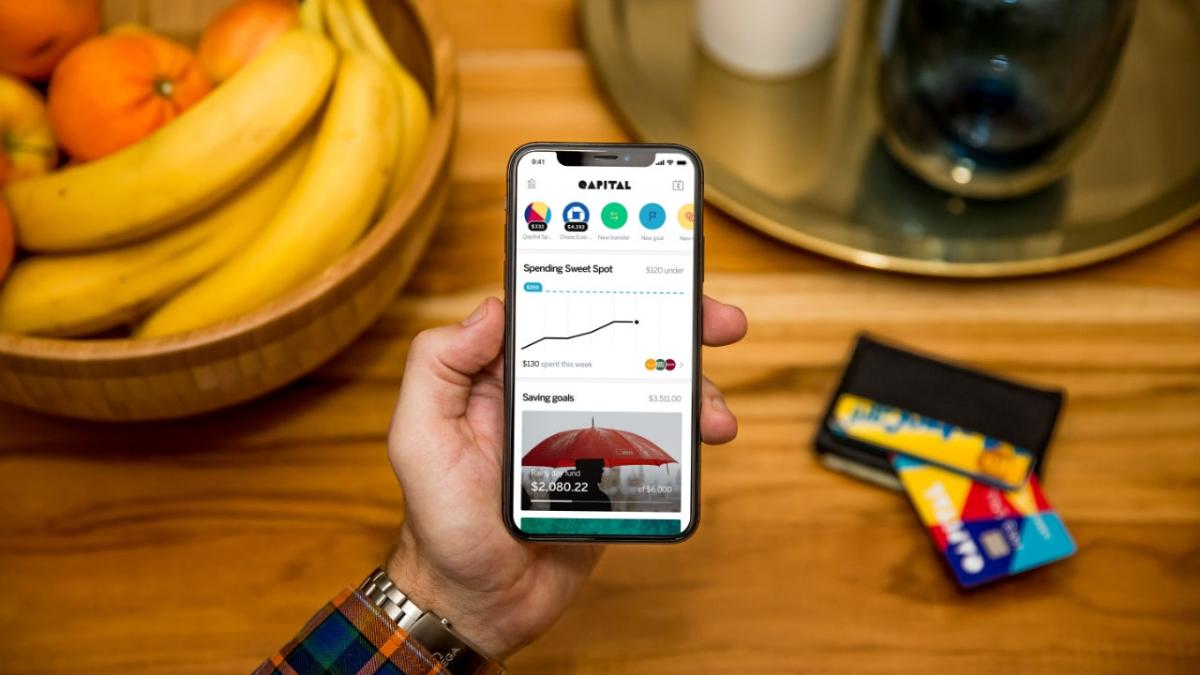
Qapital, a mobile-first bank, combines behavioral psychology with technology to facilitate passive saving and investing through customizable triggers.
After a 30-day free trial, Qapital charges a monthly fee of $3, $6, or $12, depending on the plan you select. Upon registration, you'll choose specific goals (e.g., a new car or a Hawaiian vacation) and establish rules that will automatically fund your goals from a linked checking account. For instance, you can set a rule to save a certain amount of money every time you run a mile.
You can also opt to receive a Qapital Visa debit card along with an FDIC-insured checking account that earns a 0.05% annual percentage yield (APY). Whenever you make a purchase with your Qapital card, it can round up the transaction and save the change toward one of your savings goals. The card does not entail monthly or overdraft fees, but there might be ATM fees.
When you decide to access the funds in your Qapital Goals (savings) account, you can either withdraw the money through the app by transferring it back to your checking account or spend it using the Qapital debit card. Additionally, Qapital offers Qapital Invest, which assists users in purchasing stock and bond funds based on their chosen risk level, with a minimum investment of $10.
While not a traditional "round-up" app, Oportun (formerly Digit) employs automation and AI to analyze your spending and income patterns. When it deems it appropriate, the app transfers funds from your external checking account to your Oportun account.
You can set your own spending goals, such as saving for student loans or concert tickets, and Oportun will handle the budgeting on your behalf. If you consistently save for three months, your FDIC-insured Oportun account will reward you with a quarterly 0.10% annual savings bonus.
Oportun strives to prevent overdrafts for its members whenever possible and provides reimbursement for up to four instances of overdraft fees caused by a save performed by Oportun each month.
It's worth noting that Oportun charges a $5 monthly fee for its services following a six-month free trial for new users. If you're on a tight budget, it may be prudent to explore other app options.
Qoins aspires to help users accelerate their journey out of debt through round-up contributions.
The app necessitates users to link their accounts, typically checking or credit card accounts, used for making purchases. Every time you make a purchase, Qoins rounds up the transaction to the nearest dollar and deposits the difference into your Qoins account.
On a monthly basis, Qoins utilizes the round-ups accumulated in your Qoins account to make debt payments on your behalf. You have the flexibility to add multiple debt accounts to your Qoins profile, although the company primarily concentrates on credit card and student loan debt.
Similar to Digit, Qoins charges a fee: $4.99 per month or $49.99 per year.
Saving money is one of the wisest decisions you can make for yourself and your family. It provides a financial safety net in case of emergencies, helps you achieve your financial objectives, and offers peace of mind.
Most significantly, saving money demonstrates your commitment to securing a better future, where you can purchase a home, retire comfortably, or simply enjoy life without financial worries.
A money-saving app serves as a valuable tool to track your spending, establish budgets, and make informed financial decisions. These apps come in various forms, each offering unique features designed to enhance your savings efforts.
Money-saving apps can automatically monitor your spending by recording all your purchases, providing you with a clearer understanding of your financial outflows. This information proves beneficial when adhering to a budget or planning future financial endeavors.
Moreover, some money-saving apps offer personalized recommendations on how to improve your financial standing. These suggestions may encompass increasing your investments, reducing debt, saving more money, enhancing your credit score, or boosting your net worth.
The ideal amount to have in savings hinges on several variables, such as your income, expenses, outstanding debts, and lifestyle choices.
Generally, financial experts recommend maintaining a savings equivalent to three to six months' worth of living expenses. This reserve serves as a crucial buffer against unforeseen events like job loss or medical bills. However, the exact amount may vary depending on your specific circumstances. If you possess substantial debt or higher
Continue
Comments
Post a Comment